Saturn

Enceladus

It’s fair to say that although all of Saturn’s moons have their own interesting features, most of them are fairly similar, being inactive balls of rock and ice. There are two glaring exceptions. Titan, with its thick atmosphere and active chemistry, with the other being Enceladus. Enceladus is a small moon, only 505 km in …
Enceladus Read More »

Tethys

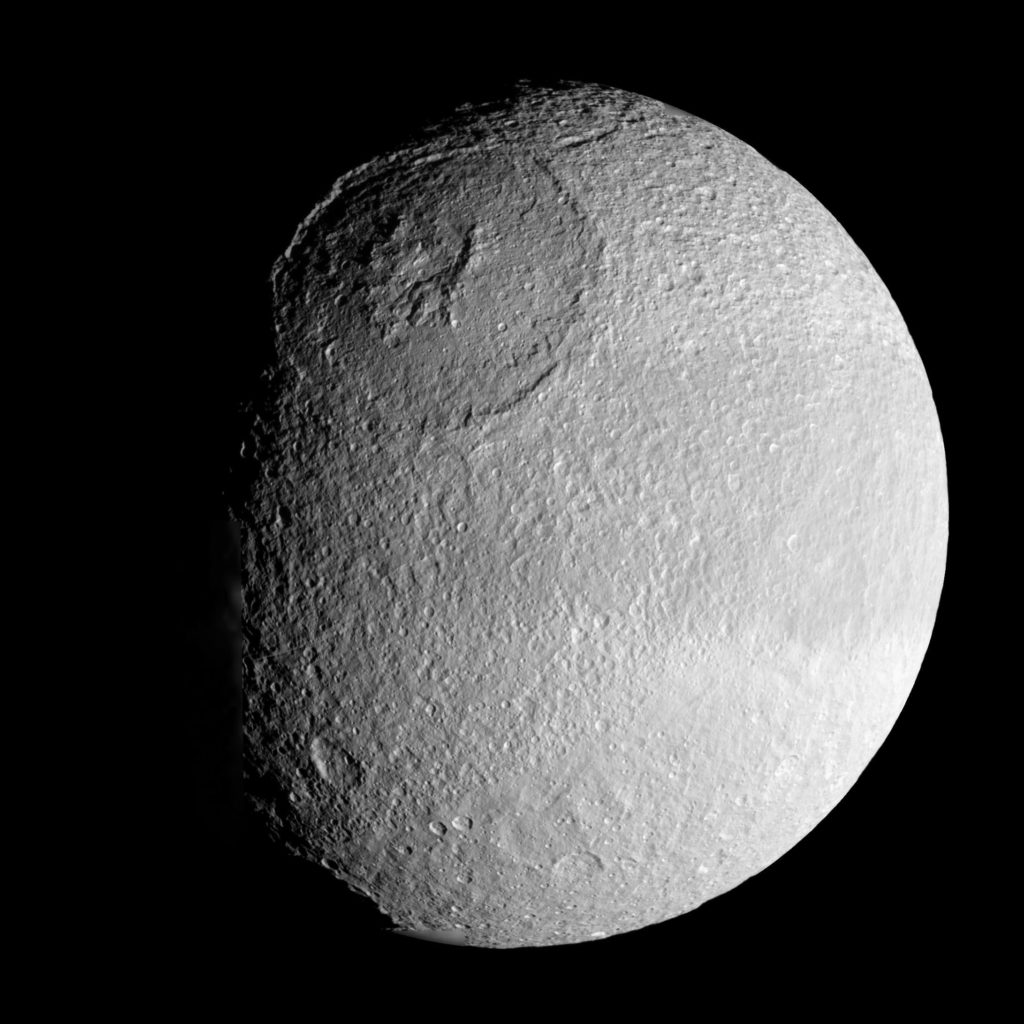
Tethys is Saturn’s fifth largest moon with a diameter of 1,066 km. It is similar to the larger moons of Dione and Rhea but is not as heavily cratered. This is likely due to the fact the moon is relatively close to Saturn, at a distance of 294,660 km which means that Saturn’s tidal influence …

Tethys Read More »

Dione

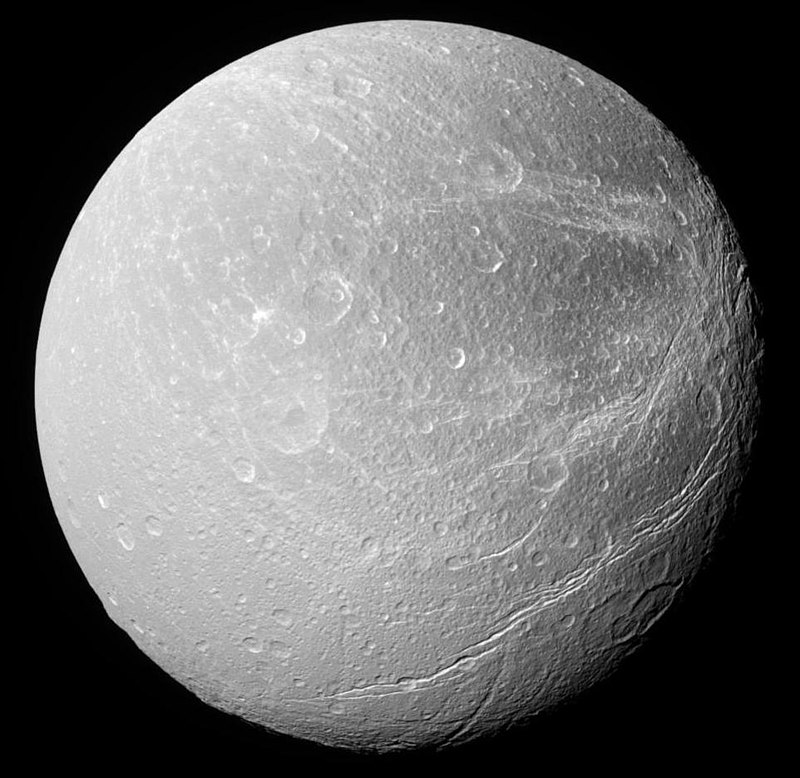
Dione is Saturn’s fourth largest moon with a diameter of 1,123 km and orbits Saturn every 2.7 days at a distance of 377,400 km, a similar distance to that of which the moon orbits the Earth. Unlike many of the other moons of Saturn, Dione is rather dense which suggests that around a third of …

Dione Read More »

Iapetus

Iapetus is Saturn’s third largest moon with a diameter of 1,472 km. It has been suggested that like Rhea, Iapetus is 75% water ice and 25% rock. It orbits nearly 3.5M Km from Saturn and this great distance froom the planet’s tidal forces has allowed the moon to remain relatively unaffected by resurfacing so it …

Iapetus Read More »

Rhea

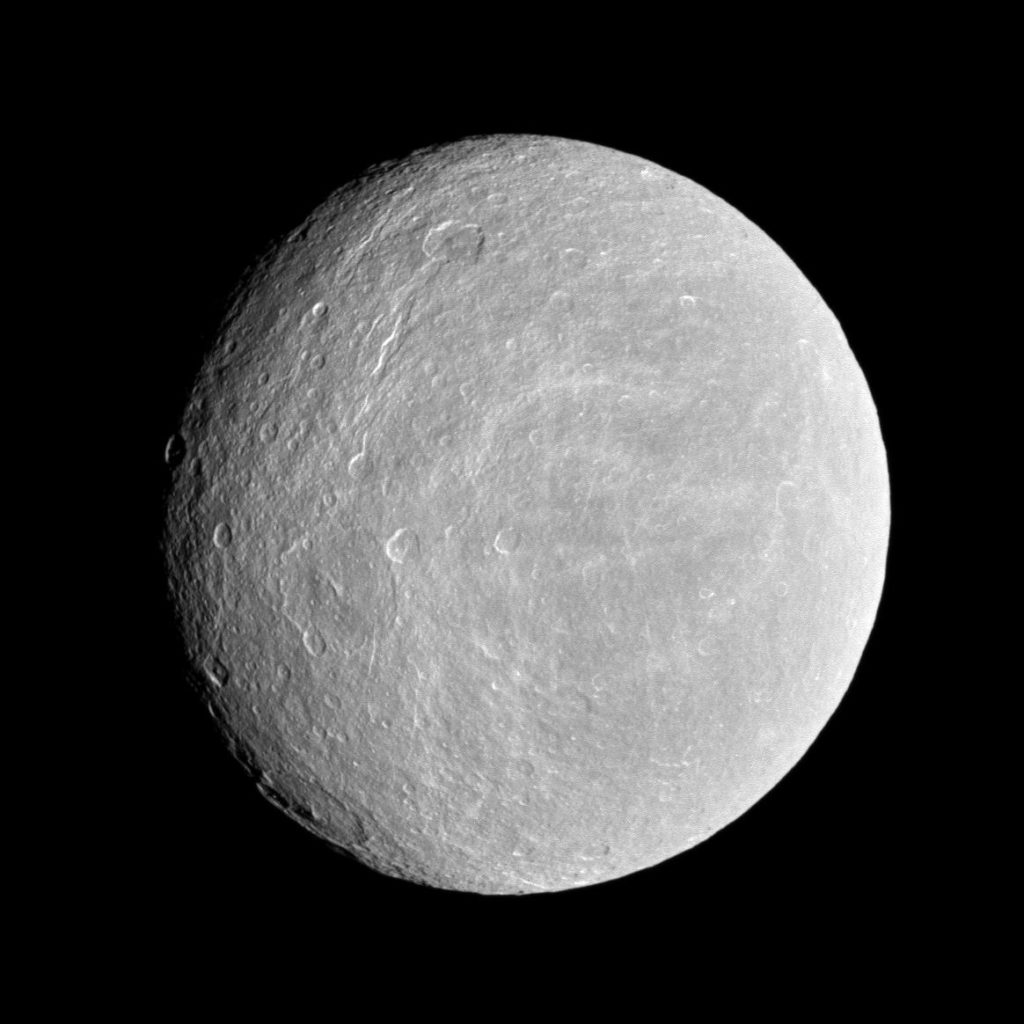
Rhea is the second largest of Saturn’s moons but with a diameter of 1,529 km it is less than a third of the size of Titan. Rhea is 527,000 km from Saturn , further away than Dione and Tethys so it does not receive ample tidal varition from Saturn to cause internal heating. With very …

Rhea Read More »

Titan

Titan is Saturn’s largest moon, and the second largest in the solar system after Jupiter’s Ganymede which is 2% larger. It has a diameter of 5,150 km and is 1.8 times larger than Earth’s moon. It is also bigger than Pluto and Mercury, although smaller than Mars. Titan takes takes 15 days and 22 hours …

Titan Read More »